Watercolor Happy Easter Seamless Pattern Review
As a designer who has spent years translating digital art into tangible stitched goods, I approach every new machine embroidery design with a mix of excitement and skepticism. The gap between a beautiful screen image and a successful finished product is often where projects fail. Recently, I examined the Watercolor Happy Easter Seamless Pattern, an asset categorized under Illustrations, to see if it holds up under the scrutiny of real-world production. This isn't just about how it looks on a monitor; it is about how it behaves when thread meets fabric.
The First Impression: Mood and Visual Flow
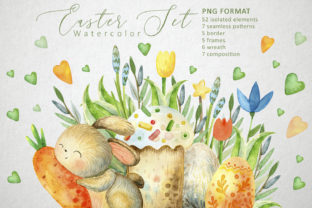
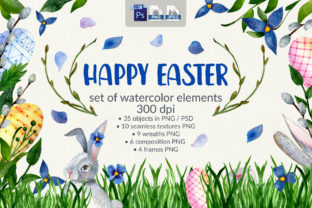
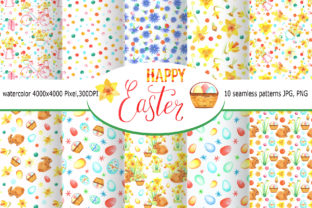
At first glance, the Watercolor Happy Easter Seamless Pattern exudes a soft, nostalgic charm that fits perfectly into the spring season. The watercolor aesthetic relies heavily on gradients and soft edges, which can be tricky in embroidery. In the digital realm, these transitions are smooth, but in stitching, they require careful management of fill stitch density and color blending. The pattern feels airy and light, suggesting it belongs on items that benefit from a gentle touch rather than heavy, industrial branding.
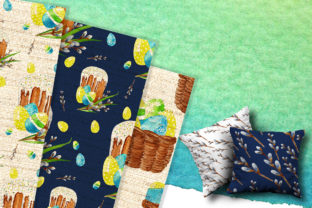
When I visualize this as a tote bag design or a kitchen towel, the seamless nature allows for endless repetition without obvious breaks. This is crucial for home decor items like pillow covers or nursery curtains where the pattern needs to wrap around the fabric naturally. However, the delicate nature of watercolor means that the stitch density must be balanced. If the density is too high, the soft look becomes muddy; too low, and the colors won't cover the background fabric effectively.
Real-World Application: From Concept to Stitch
Let's talk about a specific scenario. Imagine you are an Etsy seller preparing a collection of custom baby blankets for the upcoming holiday season. You want something festive but not overwhelming. Using the Watercolor Happy Easter Seamless Pattern for baby embroidery seems ideal because the soft hues are generally soothing. However, the challenge lies in the execution. On a plush blanket, the texture of the fabric interacts with the thread differently than on a flat cotton sheet.
I would recommend testing this embroidery file on a scrap piece of the actual blanket material first. Watercolor effects often rely on layering thread colors to create depth. If your machine pulls the thread too tightly, the fabric might pucker, ruining the fluid look of the design. For custom apparel like sweatshirts, the seamless pattern could work beautifully as a back print or a large panel on the chest, provided the stabilizer is robust enough to handle the area coverage.
For small shop products like aprons or tea towels, this design adds immediate value. Customers looking for handmade gifts often seek unique patterns that feel personal. The Watercolor Happy Easter Seamless Pattern offers that artisanal feel. When used on a personalized gift, such as a monogrammed towel with the pattern as a border, it elevates the item from a generic commodity to a boutique-quality piece. The key is ensuring the transition from the solid text to the watercolor pattern is clean and intentional.
Navigating Technical Challenges
While the design is visually appealing, there are specific situations where caution is required. The soft, blended nature of watercolor does not translate well to small hoop sizes. If you attempt to stitch a small section of this pattern on a 4x4 inch hoop, the details may get lost, and the color blending will appear blocky rather than fluid. This is a critical consideration for caps or hats, where space is limited and the surface is curved.
Furthermore, the choice of fabric texture matters immensely. On dark fabrics, the light, airy tones of the watercolor effect might struggle to show up unless you use a top layer of white backing or a dense underlay. This increases the stitch count and cost, which affects your pricing strategy as a craft business owner. Similarly, on stretchy fabrics like jersey knit, the tension required for the fill stitches can cause the garment to distort over time, especially after frequent washing.
Detailed corners and tiny elements within the seamless repeat can also be problematic. If the pattern includes fine lines or very small floral accents, they might disappear or turn into blobs if the running stitch settings are not optimized. Always inspect the design at 100% zoom before committing to a full run. If you plan to sell these as digital embroidery files, ensure that the instructions include guidance on scaling and hoop adjustments.
Practical Designer Notes for Success
To get the most out of the Watercolor Happy Easter Seamless Pattern, follow these practical steps:
- Test on Scrap Fabric: Never skip this step. Stitch a sample on the exact fabric you intend to use to check for puckering and color accuracy.
- Check Thread Contrast: Ensure the thread colors pop against the background. Light pastels on white fabric may need a subtle underlay to prevent transparency.
- Review Stitch Density: Adjust the density in your software if possible. Too dense, and the watercolor look vanishes; too sparse, and the fabric shows through unevenly.
- Confirm Hoop Size: Verify that the repeat size matches your hoop. A seamless pattern loses its magic if it gets cut off awkwardly.
- Use Proper Stabilizer: For holiday embroidery on heavier items, a tear-away or cut-away stabilizer is essential to maintain the shape of the design.
- Inspect Small Details: Zoom in on the digital preview to ensure no tiny threads are floating or creating loose loops.
- Test in Black and White: Before coloring, view the design in grayscale to ensure the contrast is sufficient for visibility.
- Compare Backgrounds: Mock up the design on both light and dark fabrics to see how the watercolor effect adapts.
- Verify Licensing: As a commercial embroidery user, confirm you have the right to sell finished items made with this design.
Impact on Brand and Customer Trust
Using a high-quality design like the Watercolor Happy Easter Seamless Pattern directly influences customer perception. In the crowded market of handmade goods, visual appeal is the first hook. A well-executed pattern signals professionalism and attention to detail. When a customer sees a handmade product with a crisp, vibrant, and thoughtfully integrated design, their trust in your brand increases.
This pattern is particularly effective for brand consistency. If your shop specializes in spring-themed goods, using this seamless pattern across various items—embroidered patches, tote bags, and clothing—creates a cohesive collection. It helps customers recognize your style instantly. Conversely, poor execution, such as misaligned repeats or muddy colors, can damage your reputation. The difference between a good finished product and a great one often lies in these technical nuances.
Ultimately, the Watercolor Happy Easter Seamless Pattern is a versatile tool for creative entrepreneurs. It bridges the gap between digital artistry and tactile craftsmanship. Whether you are creating a one-off personalized gift or producing inventory for a small shop product line, understanding its strengths and limitations is key. By taking the time to test, adjust, and refine your approach, you ensure that the final result captures the whimsical spirit of the design while standing the test of time and wear.