White Watercolor Circles Clipart: A Designer Review
As someone who has spent years navigating the delicate line between digital art and physical thread, I approach every new machine embroidery design with a mix of excitement and skepticism. The transition from a crisp screen image to a textured fabric surface is where many projects succeed or fail. Recently, I had the chance to evaluate White Watercolor Circles Clipart, a set of Illustrations that promises a soft, artistic aesthetic. Before you download this embroidery file for your next client order or Etsy listing, let’s talk about how it actually performs in a real-world stitching scenario.
The First Impression: Softness Meets Structure
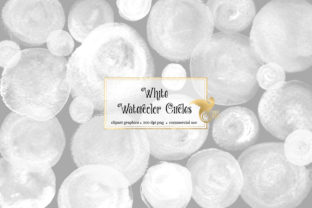
When I first opened the preview of White Watercolor Circles Clipart, the immediate mood was one of gentle minimalism. These aren't hard-edged geometric shapes; they mimic the organic, bleeding edges of watercolor paint. For an embroidery designer, this visual personality suggests a specific type of project. It feels like something that would sit beautifully on a linen tote bag, a baby's nursery blanket, or a high-end boutique apron. The layout is airy, relying on negative space to create its impact rather than dense coverage.
However, the challenge with any "watercolor" style in embroidery is replicating that gradient fade without turning it into a muddy mess of thread. In a standard fill stitch, achieving a true watercolor look requires careful color blending and potentially multiple layers of thread density. If you are planning to use this as a digital product seller offering mockups, the visual appeal is strong. But if you are the one running the machine, you need to understand that the "white" aspect of the title implies a reliance on the fabric background or white thread over light fabrics.
A Real-World Test: The Custom Linen Tote Bag
To truly judge the utility of White Watercolor Circles Clipart, I imagined a specific client request: a series of custom embroidered tote bags for a local artisan market. The goal was to create a handmade product that felt modern yet timeless. I envisioned placing these circles on natural, unbleached linen. The texture of the linen would complement the organic feel of the circles, creating a sophisticated finished product.
In this scenario, the stitch density becomes critical. Because the design relies on soft edges, using a tight, heavy fill might make the circles look stiff and blocky, losing the watercolor charm. Instead, a lighter fill or perhaps a creative use of running stitch along the outer edges could mimic the paint bleed effect. For a craft business owner, this means spending extra time digitizing or adjusting settings to ensure the final result doesn't look like a simple circle patch but retains the artistic integrity of the original clipart.
If I were selling these as Etsy listings, the customer reaction would likely hinge on the execution. Buyers looking for personalized gifts appreciate uniqueness. A tote bag featuring these circles, perhaps paired with a monogram in a complementary font, would stand out against the sea of generic floral designs. However, if the stitching looks sloppy or the thread contrast is poor, the perceived value drops immediately. This is why testing is non-negotiable.
Navigating Fabric and Hoop Constraints
While the design is versatile, there are specific situations where White Watercolor Circles Clipart needs to be used with caution. One major consideration is the fabric texture. On highly textured fabrics like heavy canvas or boucle, the fine details of the watercolor edges can get lost. The thread might sink into the weave, making the circles appear smaller or less defined than intended.
Similarly, consider the hoop size. If you are working on a small hoop, say 4x4 inches, you must ensure the circles don't get too crowded. The beauty of this design lies in its spacing. Squeezing too many elements into a tiny area will ruin the airy aesthetic. Conversely, on larger projects like a sweatshirt embroidery or a pillow cover, you have the freedom to scale the design up, allowing for more intricate color transitions.
Another critical factor is the fabric color. Since the design is titled "White," using it on dark fabric presents a significant challenge. You cannot simply stitch white thread over black denim and expect a subtle watercolor look; it will look stark and flat. To make this work on dark materials, you would need a stabilizer with a backing layer or a specialized underlay technique to create a smooth base. Alternatively, you might need to adjust the thread colors entirely, moving away from the literal "white" concept to maintain the soft aesthetic.
Practical Notes for the Professional Maker
Before committing this embroidery project to a commercial run, I always recommend a few practical steps. First, test the design on scrap fabric that matches your final material. This allows you to check the thread colors and see how the light hits the stitches. Does the gradient look smooth, or are there visible gaps? Is the stitch density too high, causing puckering?
Second, review the design in black and white printable mockup formats. Sometimes, what looks good in color loses its definition when stripped down. This helps you assess the shape and flow without the distraction of hue. Third, confirm the licensing terms. As a small shop product creator, you need to know if you can sell items made with this design or if you are limited to personal use. Never assume; always verify the rights before listing a custom apparel item online.
Finally, think about the end-user experience. Will this design hold up to frequent washing? If you are making baby embroidery or kitchen towels, the durability of the thread and the stability of the design are paramount. A beautiful design that unravels after three washes will damage your reputation as a professional maker.
Final Verdict: Artistic Potential with Careful Execution
White Watercolor Circles Clipart offers a refreshing alternative to the typical bold, graphic embroidery styles flooding the market. It brings a sense of calm and sophistication to commercial embroidery projects, particularly for brands focused on wellness, home decor, or gentle aesthetics. However, it demands a skilled hand. It is not a "load and go" design that works perfectly on every surface without adjustment.
For the experienced designer willing to tweak settings, choose the right stabilizer, and select appropriate fabrics, this asset can elevate a simple tote bag design into a premium gift. For the hobbyist, it serves as a wonderful learning opportunity to master fill techniques and color blending. Ultimately, the success of this embroidery file depends on your ability to translate the fluidity of watercolor into the structured language of thread. If done right, the result is a finished product that feels both handmade and professionally curated.